By Malia Thandiwe
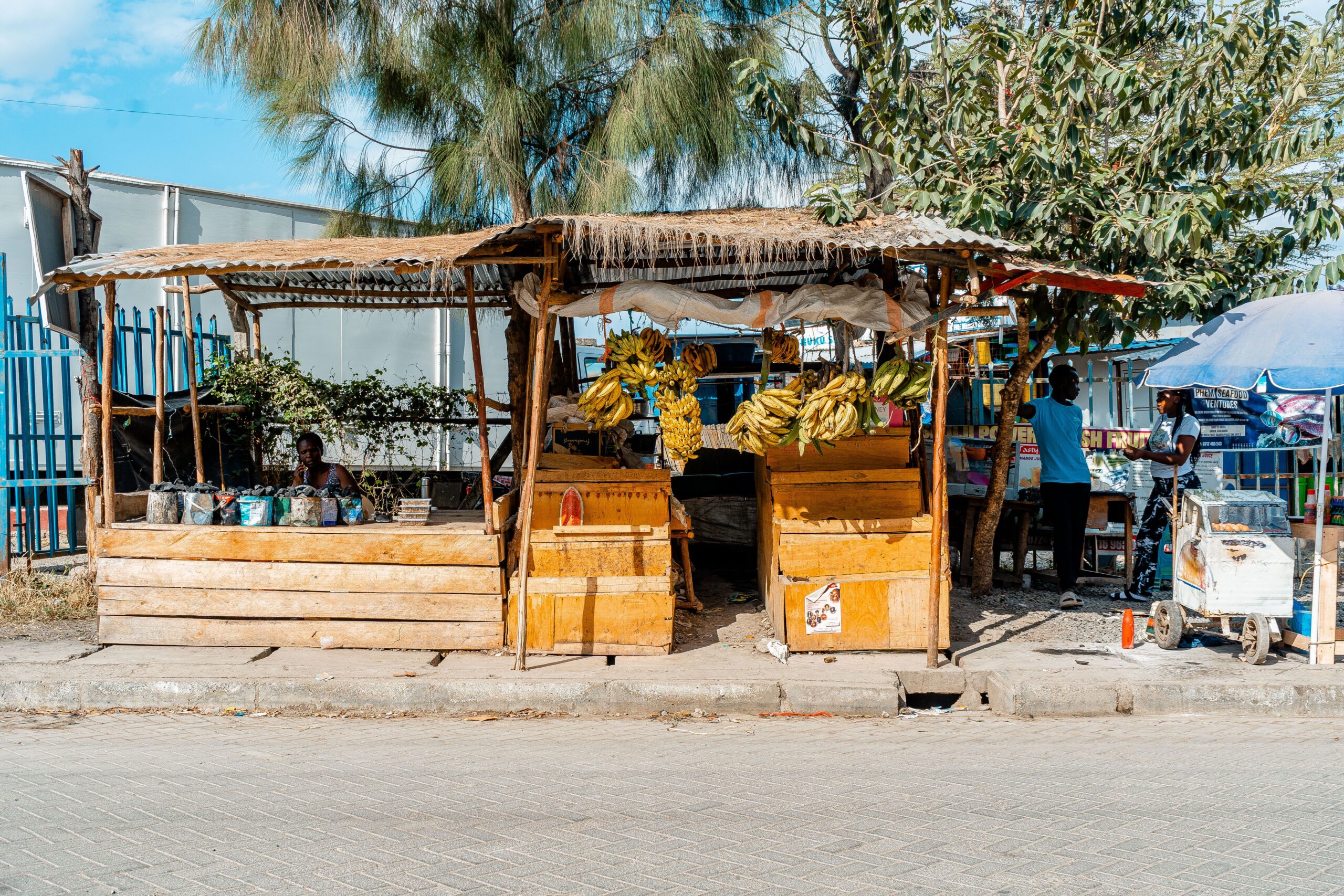
Everyone should be home by seven. That is the law. My mother is sick, coughing through the night. Police patrol our streets, once vibrant with appetizing smells from Min Rech’s fish stand, Maitu Wanja’s snack shack of warm mandazis sold by the dozen, and hot chips. Laughter, music, chatter, and motorbikes owned these streets. Now they belong to the occasional rat-tat-tat of police guns. Sometimes dogs howl in protest; otherwise, it is still.
I’m torn between two demands. I want to impress Mama with my bravery, but I am afraid to break the law. I follow the rules, that’s how life is, and must be. I draw a star in my notebook each time I am praised for good behaviour.
Our house on Sanford Road, Matopeni Ward is quiet. Mama does not want to listen to taarab tonight. I imagine she is seething, too incensed by my cowardice to enjoy her nightly ritual. She clutches her chest and rolls forward hacking out three scary coughs. I am at her side in an instant, adjusting her to sit upright. I pour steaming water into a plastic green bowl we use for fruit and place it on a towel on her lap. I rub her back as I steady the bowl. “Take deep breaths,” I say. Soon she is relieved but the night will not be peaceful. I will wake up several times to repeat the process.
My brother and father’s portrait, as smiling as the latter is stern, stare at the austere scene. “Aliya, help me cover my feet,” Mother beckons.
“Don’t you want to go to bed? I kept the hot water bottle under the covers. It will be nice and warm,” I say while draping a blue crotchet blanket over her grey feet.
“Tomorrow, make sure you go to the chemist. Daktari will help us. They may be unavailable tonight,” she says weakly.
My heart flutters with a terrible feeling. I look at our living dead’s portraits before switching on the radio, tuning to a classical music station and play it on low volume while I wash the dishes.
Our home is a three-room dwelling. One sitting room-kitchen and two bedrooms built along a narrow path that separates the quarters in two. Father rented these rooms as shops before he died, when we still lived in Mowlem, where he taught at a day high school. He was strict but popular among his students. Unfortunately, Mboya and I experienced only his brutality. Home ran like a military camp where tough rules were enforced into a regimented way of life. Breakfast at six in the morning, even on Sunday. No sodas, no sweets, no television after eight at night, no music outside the allotted two hours between four and six in the evening. Mboya and I devised ways to lessen his blows, as unpredictable as January rain, as torrential as El Nino floods, that pummelled our little bodies if we broke any of his ridiculous rules; if we made any mistake. He was a difficult man to please. Our playmates assumed we were overfed because of our thick hips and arms. They scarcely knew we wore extra shorts and shirts as shields under our clothes.
To this day, the bone I pick with Mother is; she never defended us. That she feared him too was evident. She fumbled to put away puzzles, snacks, magazines, switch off the TV, stop whatever we were doing at the sound of his footsteps followed by his pungent deodorant, and grunting to clear his throat, announcing himself outside the door before banging it to be let in.
Mboya struggled against conforming more than I. I had more avenues for escape. I loved to read books; I was mostly home. He preferred to play basketball with his mates during our free time; a habit Father gradually restricted the older he became. Mboya would have defended his right to relax with his life; leisure time was a precious and scarce.
I remember, clear as day, their final argument.
“Where have you been?” Father boomed, startling Mboya who had walked in the front door. He hadn’t expected him to be home on a Saturday afternoon during football season. He was almost as big as Father, six feet tall, his muscles lean and taut.
Our apartment, although better than this place, was small. The library, where I sat, was a corner of the sitting room with a wicker chair and a one-metre-high book case with shelves sagging and sides bulging with books. I watched wide eyed, breath bated, anticipating Mboya’s violent punishment. Instead of apologizing he said, “Why don’t you love us dad? Its just five o’clock.” He lifted the basketball nested on top of his sports shoes in a mesh bag, “As you can see, I was on the pitch.”
“Who gave you permission?”
“Mama did,” Mboya replied indignantly. I knew my brother and the thought of what he would do alarmed me. I wanted to yell reason into the situation, wished my mother would come out from hiding in the bedroom. Mboya’s nostrils flared, a single, throbbing vein streaked the left side of his forehead. Dad had no idea whom he was provoking.
“Omera, you are a fool,” Father said, rising from the sofa. “Unless you have ever seen her pay a single bill in this house, I am the end all and be all. Every decision, every move starts and ends with me, you hear?” He poked and pushed Mboya’s head with his index finger.
“And you are less of a man to speak of the mother of your children in that manner.” Mboya shook as anger pulled at his clenched jaw, pulsing it with intolerance. He lunged at Father. They fought badly that evening. When Mboya extricated himself from Father’s deathly grip, his face was puffed and bloody. Mboya succumbed to his injuries, he had been missing for week after the fight. Pain runs deep as a canyon in our family. Mother and I keep it locked away.
Mboya’s smile encourages me to be brave. It is nine o’clock. I check on my mother, silent on the sofa but breathing, and steal into the night. I worry she might die if I do not get her medicine.
Doctor Omari’s house is three hundred steps away. I have counted. Since the lockdown, we have been regular customers. A burly policeman stops me at step seventy-five. Sanford road is eerie; nothing stirs during the patrols. Street lamps cast sepia glows on the empty streets and closed shops. On any other night, the moon would inspire poets into a composition. Tonight, it’s the only witness to my encounter.
“Do you know its curfew? Public health orders from the ministry.”
“My mother is sick,” I plead.
“That’s what the hoodlums say,” he laughs, stroking me with his cool rubber baton. A beating would be the best-case scenario.
“Where is your mother,” he asks.
“Back there, at home.” I point at the squat stone building with a green gate and pink window frames.
“What ails her?”
“Pneumonia, or malaria, we are not sure.”
“She needs a doctor.” He repeats the obvious.
“I am on way to Daktari, kule.” He looks behind in the direction of my pointed finger then back at me.
“No chance, you may be contagious. You don’t even have a mask.”
To my horror, I realize my face is bare. “I…I forgot,” I stammer.
“I’ll forgive you, even though the bigger offence is you are outside during curfew. Go home, you will treat your mother tomorrow.”
“I am scared she won’t make it. She is very ill,” I implore, almost in tears, I would have gone down on my knees, but for prideful inhibition, I remain on my feet. Incredulous too at his uncharacteristic benevolence. He won’t bundle me into a mariamu.
“She will be fine, go home,” he says, pushing me in the direction of our house. I reluctantly obey and turn away, my legs marching in the direction ordered, something else is pulling me away, betraying my defiant spirit.
I want to skip cycling practice but the race next Saturday demands I show up. I am saturnine on the sunny morning. My usual wry humour, scorched by worry, is as dry as hay. I tell jokes to cope. People’s laughter distracts me from how I feel, and the situation at home. What will I do if mama does not get better? I wrestle with belief even when my behaviour is complimented. I carry my notebook of stars as a reminder of society’s approval. I am a good girl even if daddy never thought it so. Inside I am dark cloud.
Coach notices my sullen expression. I am faraway thinking about Mother. After practice, I will pick up her medicine from Dr. Omari. “Aliya, are you with us?” he asks, jolting me from dreary dreamland to the present where he is showing our team the best cycling formation to minimize drag. “We will talk later. For now, stay with us.”
“What is wrong?” We are sitting at an eatery on the side of the road, drinking sodas.
“Mama is ill.” I tell him what he already knows, but he acknowledges the information with sympathetic nods. “I don’t sleep.” I proffer details, grateful for a listening ear, “I am afraid of disappointing her, of what will happen if I am not courageous. Last night, I could not get her the help she needed. I listened to the police man when he told me to go home,” tears streak down my face, dropping into my glass of soda creating tiny ripples on the dark surface. “She could have died.”
“Go easy on yourself,” Coach says gently. He does his best to hide his surprise. He has never known me to be anything but cheery. He reflects for a long time while I regain composure. I dry my tears with the bottom edge of my t-shirt. He says, “Rules are good for order in ideal scenarios. Sometimes rules are made to benefit a few people while they make the rest miserable. An enforcer of rules should be able to judge each situation and make adjustments according to the situation. Daktari’s house was close by. At least he should have escorted you.”
His words ease a burden of guilt, heavy as an anvil on my shoulder.
I stop at Daktari’s house to pick up Mama’s medicine. Her dose is unusual but she has insisted on the exact dispensation because it makes her feel better. Dr. Omari refuses, explaining that such a dose might relax her muscles irreparably; it could be fatal. Who should I obey? My mother who knows what she needs or the doctor? “Lakini this is what you have been giving us. Why have you changed your mind?”
“Two or three times is fine in an emergency but I cannot continue prescribing like this. I’ll be responsible were something to happen to her this time. I could lose my licence. Have you taken her to hospital?”
“She is too weak, and we cannot afford it. She has not been working.”
“I will come and check in soon,” they say, dismissing me to answer a phone call.
Mother has been waiting for her medicine in a fever of impatience; her blankets and covers pool the floor, lying on the spot where she has kicked them off her body. She would have smacked me were it not for lethargy, for failing to bring the dose as instructed. I slink to my room in defeat, wishing I were less of a disappointment.
Meditating on Coach’s words, an idea strikes me. I sit up on my bed, my heart beating, hardly breathing. Night carries Mama’s raspy coughs through the thin walls. She actually seems worse than earlier. Having no other choice but to transform thought into action sooner than expected, I bolt into the semi-darkness.
“I made it,” I rejoice in my mind, my heart soaring in elation. I knock Daktari’s door and call their name when no one answers. Regretting my decision but still irresolute about whether to keep trying or return home, I see the patrol car stop a few metres ahead, and the police officer from last night disembark. White beams shine out of mariamu’s menacing headlights. I squint and press the side of my body on the gate, moving into the shadows.
“Your mother is still sick?” the man asks. His stomach, distended from his slim body, pulls the buttons of his navy-blue coat twinkling with minuscule droplets of droplets of water. It must have rained where he is from. The coat ends in a frayed hem at his ankles. On his feet: shiny high top black boots with metal plates glimmer at the toe box.
He takes his time walking the few steps towards me, torturing me with suspense; “What will he do?” I agonize wordlessly. Unable to bear the waiting any longer, I run. My feet are in mutiny; going against the consensus of my mind that knows what happens to those who ran away from the police.
At Jonte’s birthday party celebrated without music on a rooftop, the unfinished level of a flat in progress. Relying on conversations in hushed tones to pass curfew, Jonte told us his ground intel of motorbike riders, daredevils who charged a premium to attempt to get passengers home using back routes, had seen a drunkard shot while running away, two weeks ago.
Our collective rule as friends, to survive the times is: never run, hopefully no harm will come to you. The one rule I should not have broken, I ruminate, chastising myself as shots upend the forced calm of the night. I anticipate the sharp sear of the bullet through my skin: I hope death will be quick, and painless. Instead, I zip into the narrow streets where mariamu cannot follow, splashing into dirty, stagnant water that wets my jeans’ bottoms, slowing me with cold, uncomfortable weight. I stumble into the walls of rusty sheds that are goods stands at daytime; mabati crackles in dissent. My breathing, the hissing wind speeding past, soundtrack the drama.
Chocking smoke creeps insidiously up my nostrils. It takes a heartbeat to realize it is teargas burning my face and stinging my eyes. Disregarding physical laws, the explosion sounds in my ears much later. A sensory nightmare. Seconds became elastic, stretching as plasticine, my movements. I scurry under a wooden stand to focus on regaining normal breathing. Panic aggravates teargas’ toxicity spreading the poison faster in my body. A rat scampers over my rubber shoes. On the stand’s underbelly, reggae stickers in muted hues provide futile ease. Overwhelmed, and in near suffocation, I crawl out, desperate for fresh air. I surrender, relieved that I can breathe and follow the policeman into mariamu’s gaping, dark, maw.
“Where were you going?”
“To Daktari, to ask for help. My mother is sick.”
“At this time?”
“Illness is inconvenient, it shows up when least expected.”
“Then did you run? If you were not doing anything wrong?”
“I was afraid.”
“Of police? Then you were doing something wrong.”
I am struck by the irony of their ignorance but it makes me wonder why I feared them. Factually, they are right, if I wasn’t doing anything wrong, I should not have ran. But I was breaking law; for a good cause; if there is something like that. The thief who steals a chicken to stave hunger hurts the owner of the fowl. Circuitous thoughts spin knots in my mind.
The booking area where the interrogation takes place is a long, light brown counter faded from use and neglect of maintenance. Long, blue metal rods fill the space between the counter top and the ceiling. A small gate on counter’s side leads to the cells. I give out one shoe, and my belt and follow the policewoman.
Mama’s spirit guides me through the cell’s bars. She walks me out of the prison of my mind where I had been bound by the tyranny of my father’s memory. The yearning for his love and approval had crammed me into a box of ‘do-gooding’. I had split in the middle like the hyena at the crossroads; endeavouring to be obedient, to earn the approbation of dead man. I wanted to impress everybody by doing what everybody wanted, and accepting their projections of whom they thought I should be. I did not even know enough about myself to articulate my aspirations. Just that Coach wanted me to be cyclist, Maitu Wanja predicted I would be shrewd at business, Dr. Omari recommended I be a doctor, Min Rech a lawyer. Who am I? I have to find out.
I am detained in the cells for six days with a woman claiming innocence of the charge of murder; it was self-defence, she says. Her toddler is at home with its aunt who goes to work and leaves the child alone at home. Most of us are in for breaking COVID rules. I refuse to eat the sordid suppers of large chunks of cabbage leaves in watery soup, and hard ugali with grainy spots of flour hidden in the misshapen mass. Ravenous by the third day, I eat with determined fury, to quell the shameful hunger chafing my resolution. Dr. Omari pays my bail but they come with sad news.
My mother passed away. She died on the night I had gone to look for Daktari who, unfortunately, had been away until two days later. She would not have made it anyway; somehow comforted by the assumption, I am distracted from a gnawing self-reproach: the fact that, she had died alone.
The shops we lived in belonged to her, an inheritance from my father. They come into my possession after the succession process. I sell them promptly; I need a clean break, and buy land farther away where I now reside. I still cycle with my team. I don’t complain about the tedious commute from my new home to train in Matopeni. The effort is worth it; we cycle through calming scenery, as far as Kijabe and Naivasha.
Malia Thandiwe is a poet inspired by films, music, nature, and books.
Image by Marie Frank
© 2026 Malia Thandiwe