By Malia Thandiwe
August 8th, 2002
Sharp in a grey suit with a red ribbon lapel pin, he keeps his gaze ahead, lips pursed in concentration, thinking about how to pass the eight-hour shift. His gait is stiff from guilt as he crosses the road towards Moi Avenue, past Kam’s pharmacy, towards Aga Khan Walk to kill time. The bookseller at Kenya Re hasn’t stocked the software programming books he requested. Despite his best efforts, office politics about his tribe have stymied his professional progress; after a long contemplation on whether to buy a quarter of Smirnoff, he settles for Orbit gum at Uchumi supermarket, decides against going to Mashemeji Electronics at KTDA Plaza, walking instead to Tom Mboya Street to buy eight sachets of dry gin.
His office is locked, but resilience is Mayaka’s DNA. Never mind the bone chill of retrenchment and structural adjustments suffusing the air. Never mind the specialised software programmers baying for his job. He arrived barefoot on the first day at St Mary’s Yala to become the IT services manager at National Housing – I mean, how many of his peers own a house in Nairobi?
He strides, fury in his steps muffled by thick red carpet, to human resources at the end of the corridor. The nameplate on the door reads Samantha Peters, unchanged since her exodus after the bomb blast on August 7th. Inside is Jeminah, the replacement, in a bright pink suit, short hair and a round, jovial-looking face.
“Mayaka, do we have an appointment?” she asks as she checks her desk calendar, a concerned countenance on her face.
“We do not. It’s an urgent matter; I wouldn’t be here otherwise. Edgar is not in the office again today,” he says in a voice tight with anger. “How many times must I come to work to come here and beg for a key to my office?” He shares the room on the seventh floor with an architect whose models take up so much space that Mayaka’s desk is squeezed into a corner.
Jemimah nods as if empathising. “But aren’t you supposed to be in the field, onboarding the computer experts?”
“Programmers,” he snaps. I also have duties here, but I am constantly – Eyi.” Mid-sentence, he stops, cradles his forehead in his right palm, left arm folded across his chest, to retrace his meandering, rageful thoughts. “What about my request for a sabbatical to study?”
“Pending approval. As you know, it’s in the parastatal’s interest that you share duties, the work being too much to do yourself. Over a dozen times each quarter for two quarters, we have consulted programmers to cover gaps in your…ehm…how do I put this? Gaps in your work ethic and capacity. Take the day off; you seem to need it. Edgar will be in tomorrow; they are in a meeting about Pumwani allocation.”
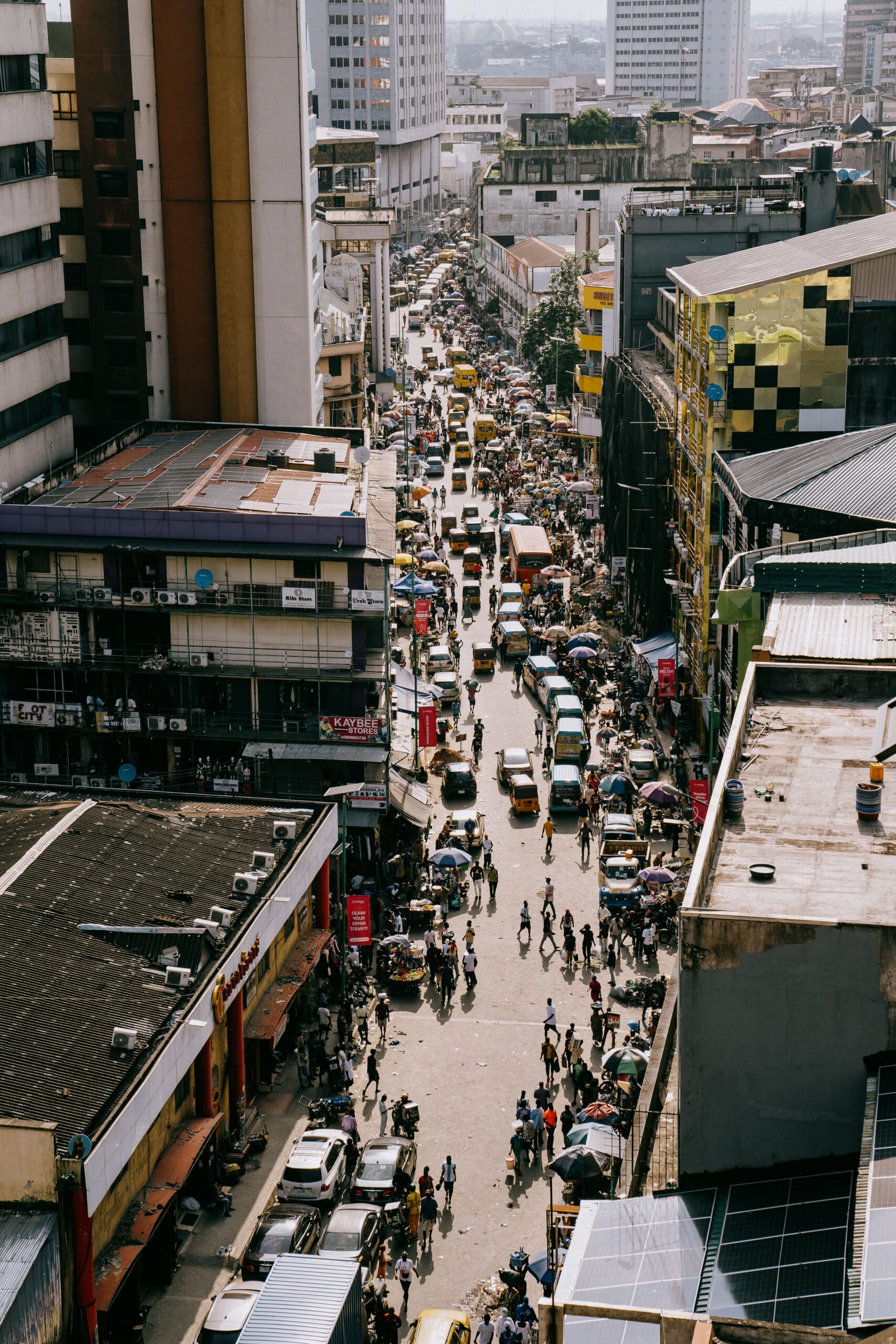
At three pm, earlier than most civil servants who clock out at four, he skips meeting Chris at Simmers to drown in the bustle of exhaust fumes and hooting traffic at Commercial, trotting to Tusker Stage with a can of blank CDs in a firm hold under his left arm to dissuade brazen thieves hunting in the torrent of pedestrians wading for right of way between hawkers on the narrow sidewalk. Thinking that it should rain soon, he spits out the taste of dusty, dry air, narrowly missing a tall, curvy woman’s brown court shoes.
His youngest of three, whom he picks up from nursery school, was born on the ninth anniversary of his sister’s death, on the same day as his promotion. In her eyes is Madina, his late sister, reborn – loosening the noose of guilt in his gait; he didn’t travel for her burial during the pandemic in 1989 for fear of bringing the disease back to his young family.
© 2026 Malia Thandiwe
Image credit Aminu Fahd